 Fractions
Learning objectives
- To match fractions in different picture patterns.
- To understand the notion of equivalent fractions.
- To know how to order fractions: graphic method or calculation of the LCM.
- To compare fractions using numbers and patterns.
- To develop strategies for representing and ordering fractions.
A fraction is a number representing a set of identical parts of a whole. Example: The fraction 3/5 represents 3 parts of a whole divided into 5 equal parts.
A fraction is a division between the number of parties considered (the numerator) and the total number of parties sharing the whole (the denominator). In the fraction 3/5, the numerator is 3 and the denominator is 5.
The whole is often represented by:
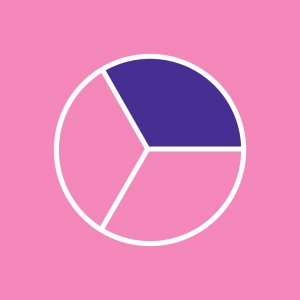
- a circle divided into identical angular sections,
- a bar divided into identical rectangles,
- a collection of items (here the tomatoes) grouped by packages.

Discover EduMedia for free
The interactive encyclopedia that brings science and math to life in the classroom.
O v e r 1 , 0 0 0 r e s o u r c e s